Wednesday, 20 August 2008

Primus Litech Frying Pan - Initial Review


DSCN2990

Most of us consider that a billy is essential for cooking in the outdoors. The billy of choice is invariably a Zebra billy of some description, although I prefer the Tracpac billy.

Over the last year, I've also used a frying pan as I do like my bacon, eggs and beans in the morning. A frying pan is nearly as versatile as a billy. Although of course you can't hang it over a fire, it's great for heating up preprepared food and shallow cooking. The shallow pan tends to heat up food quicker and you can even boil up water at a push. Of course for frying with a little oil it's unbeatable.

 DSC00540

I've been using the small frying pan out of a Trangia cookset. It helps to have a non-stick version; in fact I'd say it's essential. The only disadvantage is that the Trangia version is a little small even for one person.

I've seen a few people using a frying pan with a folding handle and after a few enquiries discovered that it's called a Primus Litech Frying Pan. After parting with £15 to Blacktoe (cheapest online by and average of £ 4-5 in UK and an excellent service) I received it the other day and took it out on a day's excursion last weekend.

 DSCN2992


The first thing that impressed me was the weight. It weighs just 268 grms. The non-stick seems robust enough and I've heard that it doesn't wear off even after heavy use over a number of years. The size is 165mm (base) x 220mm (top) which is certainly a little more generous than the Trangia frying pan. It takes up little room in the rucksack if you pack it vertically at the back of the pack. The depth is 50mm. Perhaps this is a little overkill and half that depth would have done me to be honest, but I can guess it would be a bonus for the more liquid based meals.

DSCN2991

The best design feature is the fact that the handle folds under the base of the frying pan as opposed to over the top. This allows you to pack items in the dead space of the frying pan before packing it away in the rucksack. I've put a small bag containing spoon, alcohol gel, pepper, olive oil, sauce and a pot gripper in this dead space. The provided netting bag, which could double as a foraging bag, will keep everything together.

To fold out the handle, you squeeze it together where it fixes onto the locating holes. For additional safety, you can lock the handle in position - another nice feature.

DSCN2994

Of course, this is a bit of a luxury item if you use it in conjunction with other cooking kit; but it is good addition in my opinion. Nevertheless think of this - if you're using a crusader cup for boiling up water, you might not even need to take your billy with you. This might save a bit of weight and will certainly save some space.

Pablo.

Primus Litech Frying Pan - Initial Review


DSCN2990

Most of us consider that a billy is essential for cooking in the outdoors. The billy of choice is invariably a Zebra billy of some description, although I prefer the Tracpac billy.

Over the last year, I've also used a frying pan as I do like my bacon, eggs and beans in the morning. A frying pan is nearly as versatile as a billy. Although of course you can't hang it over a fire, it's great for heating up preprepared food and shallow cooking. The shallow pan tends to heat up food quicker and you can even boil up water at a push. Of course for frying with a little oil it's unbeatable.

 DSC00540

I've been using the small frying pan out of a Trangia cookset. It helps to have a non-stick version; in fact I'd say it's essential. The only disadvantage is that the Trangia version is a little small even for one person.

I've seen a few people using a frying pan with a folding handle and after a few enquiries discovered that it's called a Primus Litech Frying Pan. After parting with £15 to Blacktoe (cheapest online by and average of £ 4-5 in UK and an excellent service) I received it the other day and took it out on a day's excursion last weekend.

 DSCN2992


The first thing that impressed me was the weight. It weighs just 268 grms. The non-stick seems robust enough and I've heard that it doesn't wear off even after heavy use over a number of years. The size is 165mm (base) x 220mm (top) which is certainly a little more generous than the Trangia frying pan. It takes up little room in the rucksack if you pack it vertically at the back of the pack. The depth is 50mm. Perhaps this is a little overkill and half that depth would have done me to be honest, but I can guess it would be a bonus for the more liquid based meals.

DSCN2991

The best design feature is the fact that the handle folds under the base of the frying pan as opposed to over the top. This allows you to pack items in the dead space of the frying pan before packing it away in the rucksack. I've put a small bag containing spoon, alcohol gel, pepper, olive oil, sauce and a pot gripper in this dead space. The provided netting bag, which could double as a foraging bag, will keep everything together.

To fold out the handle, you squeeze it together where it fixes onto the locating holes. For additional safety, you can lock the handle in position - another nice feature.

DSCN2994

Of course, this is a bit of a luxury item if you use it in conjunction with other cooking kit; but it is good addition in my opinion. Nevertheless think of this - if you're using a crusader cup for boiling up water, you might not even need to take your billy with you. This might save a bit of weight and will certainly save some space.

Pablo.

Monday, 18 August 2008

About

This site follows my adventures into nature, tracking and bushcraft as I try and get as close to the natural environment as I can

without being unduly uncomfortable.

I’m not an expert nor do I aim to teach people. Although I have teaching qualifications, there are people with more bushcraft skills than me who can do a better job.

I’m just an enthusiast willing to share my adventures of trying to be at home in the British woodland. What skills I have learnt I have learnt through trial and error and through those good people willing to pass on their experiences.

I hope through this journal, I can in some way do the same for others. I have much, much more to learn and much, much more to explore so…
Follow me on this journey into both the known and the unknown worlds of bushcraft and nature.

About me
I served in the British Army for 12 years. Here I picked up the rudiments of living off the land, field skills and a few survival and tracking skills. After leaving the forces, I carried on these skills but related them more to watching wildlife and suppose I was what was then termed as a survivalist.

When the term bushcraft was popularised, I realised that these philosophies suited mine quite nicely and I was inspired by the additional elements of craft skills which I’m trying to catch up on.

Wildlife and tracking remain my favourite disciplines and I’ve had the privilege of learning with Ian “Max” Maxwell of Shadowhawk.

About

This site follows my adventures into nature, tracking and bushcraft as I try and get as close to the natural environment as I can

without being unduly uncomfortable.

I’m not an expert nor do I aim to teach people. Although I have teaching qualifications, there are people with more bushcraft skills than me who can do a better job.

I’m just an enthusiast willing to share my adventures of trying to be at home in the British woodland. What skills I have learnt I have learnt through trial and error and through those good people willing to pass on their experiences.

I hope through this journal, I can in some way do the same for others. I have much, much more to learn and much, much more to explore so…
Follow me on this journey into both the known and the unknown worlds of bushcraft and nature.

About me
I served in the British Army for 12 years. Here I picked up the rudiments of living off the land, field skills and a few survival and tracking skills. After leaving the forces, I carried on these skills but related them more to watching wildlife and suppose I was what was then termed as a survivalist.

When the term bushcraft was popularised, I realised that these philosophies suited mine quite nicely and I was inspired by the additional elements of craft skills which I’m trying to catch up on.

Wildlife and tracking remain my favourite disciplines and I’ve had the privilege of learning with Ian “Max” Maxwell of Shadowhawk.

Sunday, 17 August 2008

Strange Coincidences

I've just started reading "Holding the Zero" by Gerald Seymour about a British sniper working in northern Iraq. The first coincidence came when, the very same day I started the book, my father sent me a cutting from an old school magazine (we went to the same school). It was a photo of him and his mates in DSCN2989 the Combined Cadet Force shooting team competing at Bisley in 1946.

My father was a particularly good shot with the rifle and went on to shoot regularly at Bisely competitions when in the Army.  Bisely in Hampshire has become the epitome of shooting elite in the UK. Seymour makes reference to Bisley as his main character's training ground of choice.

I seem to have inherited "the eye" and although not as successful as the old man, I had my share of successes when I joined the mob managing marksman qualification a few years in a row, allowing me to wear the crossed rifles on the sleeve of my best uniform.

Now the final strange coincidence. On Saturday, the same day I DSC00534 received the cutting (the same day I started the book if you remember) I was wandering into Poor Park woods when I met Rob who was the gamekeeper for the woods. Rob's job went when the landowner decided no longer to rear pheasants. Happily, Rob was able to keep the Gamekeeper's cottage and still has run of the land. He and I exchange pleasantries as I pass the cottage on the way into the woods.

Rob happened to be cleaning what looked like a rifle and we naturally got into conversation about guns. I know nothing about non-military rifles so I was keen to examine what turned out to be a Ruger M77 .246 calibre (I think that's what it was - forgive me if I'm not quite correct). The weapon had a smart looking telescopic sight and a sound moderator (sometimes erroneously called a silencer).

Rob must have sensed my interest and he invited me to have a shoot. We walked to an empty field where he put up two plastic barrels with crosses inscribed as targets at about 150 yards.

DSC00535

He had a glint in his eye as he offered me the weapon to go first at the left hand target. I resigned myself that I'd just be happy to hit the target. 20 years without holding a rifle is no match for someone who has been shooting on a regular basis for 20 years. Pistols, yes; Rifles, no.

I tried desperately to remember the 4 marksmanship principles, but I could only manage one. The weapon must be pointing naturally at the target without undue physical effort. Of course, archery practice helped... the shot must be followed through... (something or other).

The two shots rang out even through the fitted sound moderator. The calibre is heavy enough to take out Muntjac downwards, but of course it didn't have the kick of a military weapon.  Rob took over for his shots. Of course I was proved right, but even Rob seemed impressed as I grouped 2 inches to his 1 1/2 inches. We had a few more rounds at 150 yards and then came back to 50 yards where we both ended up getting pretty close to the cross.

DSC00537 

I was having a great time. That was until Rob told me that each shot cost a quid (one pound). Maybe I'll stick to bows and arrows!

The rest of the day was a blur as I went through the motions of watching wildlife. Every rabbit I saw had cross hairs on it!

Thus finished a day of strange coincidences. There must be a message in there somewhere. How much are Ruger rifles?

Pablo.

Strange Coincidences

I've just started reading "Holding the Zero" by Gerald Seymour about a British sniper working in northern Iraq. The first coincidence came when, the very same day I started the book, my father sent me a cutting from an old school magazine (we went to the same school). It was a photo of him and his mates in DSCN2989 the Combined Cadet Force shooting team competing at Bisley in 1946.

My father was a particularly good shot with the rifle and went on to shoot regularly at Bisely competitions when in the Army.  Bisely in Hampshire has become the epitome of shooting elite in the UK. Seymour makes reference to Bisley as his main character's training ground of choice.

I seem to have inherited "the eye" and although not as successful as the old man, I had my share of successes when I joined the mob managing marksman qualification a few years in a row, allowing me to wear the crossed rifles on the sleeve of my best uniform.

Now the final strange coincidence. On Saturday, the same day I DSC00534 received the cutting (the same day I started the book if you remember) I was wandering into Poor Park woods when I met Rob who was the gamekeeper for the woods. Rob's job went when the landowner decided no longer to rear pheasants. Happily, Rob was able to keep the Gamekeeper's cottage and still has run of the land. He and I exchange pleasantries as I pass the cottage on the way into the woods.

Rob happened to be cleaning what looked like a rifle and we naturally got into conversation about guns. I know nothing about non-military rifles so I was keen to examine what turned out to be a Ruger M77 .246 calibre (I think that's what it was - forgive me if I'm not quite correct). The weapon had a smart looking telescopic sight and a sound moderator (sometimes erroneously called a silencer).

Rob must have sensed my interest and he invited me to have a shoot. We walked to an empty field where he put up two plastic barrels with crosses inscribed as targets at about 150 yards.

DSC00535

He had a glint in his eye as he offered me the weapon to go first at the left hand target. I resigned myself that I'd just be happy to hit the target. 20 years without holding a rifle is no match for someone who has been shooting on a regular basis for 20 years. Pistols, yes; Rifles, no.

I tried desperately to remember the 4 marksmanship principles, but I could only manage one. The weapon must be pointing naturally at the target without undue physical effort. Of course, archery practice helped... the shot must be followed through... (something or other).

The two shots rang out even through the fitted sound moderator. The calibre is heavy enough to take out Muntjac downwards, but of course it didn't have the kick of a military weapon.  Rob took over for his shots. Of course I was proved right, but even Rob seemed impressed as I grouped 2 inches to his 1 1/2 inches. We had a few more rounds at 150 yards and then came back to 50 yards where we both ended up getting pretty close to the cross.

DSC00537 

I was having a great time. That was until Rob told me that each shot cost a quid (one pound). Maybe I'll stick to bows and arrows!

The rest of the day was a blur as I went through the motions of watching wildlife. Every rabbit I saw had cross hairs on it!

Thus finished a day of strange coincidences. There must be a message in there somewhere. How much are Ruger rifles?

Pablo.

Wednesday, 13 August 2008

McCandless - A Note For Dreamers

I've just finished the book "Into the Wild" by Jon Krakauer. I saw the film and was impressed by the cinematography and story. Of course, the book delves deeper and tries to explore the rationale behind Chris McCandless's travels; his state of mind and beliefs and eventual death by starvation in the Alaskan wilderness.
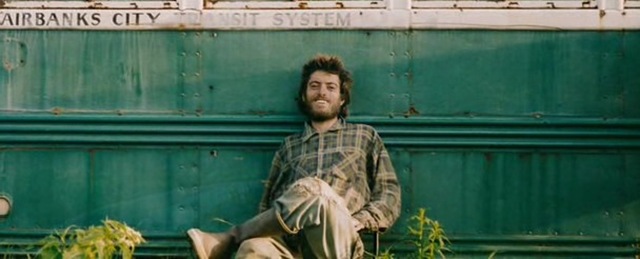
Chris_McCandless


I wasn't really too surprised that the book tried to defend what others call plain foolishness or folly especially as it was written by a fellow adventurer. McCandless was full of youthful bravado. He was idealistic and headstrong and some might say say foolish and naive. But he was also young, intelligent and fit. It's too easy to dismiss him as an idiot.

McCandless's idea was to walk into the Alaskan wilderness with minimal provisions and equipment and survive by living off the land. Perhaps something that many of us aspire to; but maybe not in Alaska!

The fact was that he didn't survive and nor did a myriad of others who have tried to do the same. Some of these excursions were also described in some detail in the book.

Rosellini summed up his failure in a letter to a friend before he committed suicide as reported by Krakauer:

   " I began my adult life with the hypothesis that it would be possible to become a Stone Age native... I learned that it is not possible for human beings as we know them to live off the land." [p76]

So why are these extended, lonely excursions into the wilderness doomed to failure and could we, with our knowledge of bushcraft and survival, do any better?

I expect a few reading this would say that they would prepare themselves better and that they would ensure that they have the requisite knowledge and skills to deal with the conditions they would undoubtedly encounter. They might say, "I've done the course, got the T-Shirt" and "survived" with just billy and blanket. As a minimum, we would at least take some emergency equipment. After all, McCandless didn't even bother with a map. He learnt no skills prior to his adventure, except for a bit of game prep. Instead he decided to learn "on the hoof" from books taken into the wilderness with him.

But are even the most experienced and skilled bushcrafters or survivalists just kidding themselves when it comes to true survival and living in the wilderness? A behind the scenes look at a Survivorman episode shows how much preparation goes into a trip. Despite the one-man presentation in a seemingly empty wilderness, locations are carefully selected and skills are learnt from a local survival expert just days before he walks in.

I suggest that survival situations are impossible to replicate. A week long course may give you a few ideas (for that particular environment) but would that be enough?

I don't believe knowledge and skills are enough. It has to be something more. In fact I consider that it's two factors. Firstly, there must be a will to survive; not just to get by and live off the land for a short time, but to actually live and survive long term (in fact shouldn't the words "live" and "survive" be used synonymously?)

Contrary to the film and book, it has been shown that there were no toxins in McCandless's body, therefore the fact that his starvation was blamed on misidentification of a plant and eating the poisonous seed pods from that plant is probably not correct. In my mind this is perhaps an excuse to blame his naivity for his death.

I believe McCandless just gave up. This isn't hard to do and anyone who has been in even a vaguely similar situation might know what I mean. I'm not an expert on survival physiology or psychology by any means but I have been an expedition leader and I have seen and experienced this syndrome. Even mild exposure in the UK's lowland hills will cause the victim to curl up in a ball while the body attempts to shut down some essential systems. If you multiply this by prolonged failure to find proper nourishment and a prolonged state of solitude in a place like Alaska, it won't be long before the body and more significantly the mind starts to give up and eventually fail.

It's not easy to recover from the downward spiral of demotivation. I'm not suggesting McCandless committed suicide (and the book goes to great lengths to dismiss these suggestions.) McCandless in fact had made up his mind to walk out; he'd had enough but then so did Rosellini. But by then it was all too late. Put up what looks to be like an impenetrable barrier (in McCandless's case it was a swollen river) and it would seem like the end of the world. He, like Rosellini, had reached the point of no return.

Examples of successful survival in extreme cases are well documented and the most successful psychological strategy has apparently been built firmly on a will, a motivation or a need to survive - an aim, a focus, a love, a family at home, a determination not to fail. McCandless had none of these or at least thought he didn't and this slowly eroded away his determination to succeed.

This brings me to the second contributing factor as to why extended wilderness living fails. This is solitude. I've often questioned the rule of three's where the final "three" is the sweeping statement that you can't survive more than three months without human contact. Perhaps a little extreme but there must be a basis for it. I'm sure many of us dream of living in the wilderness alone with the minimum of kit as did McCandless. But this dream is of course nonsense. Human contact and belonging is a basic human requirement, if not in the short term, then definitely long term. Sure, there have been some examples of people living alone but these are few and far between.

Even disregarding the psychological aspects of lack of human contact and the basic human survival requirement of belonging, there's also an obvious practical aspect. We have previously survived in the wilderness as part of a tribe or clan or family. We worked together, formed hunting parties, shared tasks and split our daily workload and chores, built communities and relied on each other.

Whether they had the skills or not, McCandless and the others lived out the dream of solitude. Perhaps this was their demise. Perhaps we shouldn't make it ours.

Pablo.